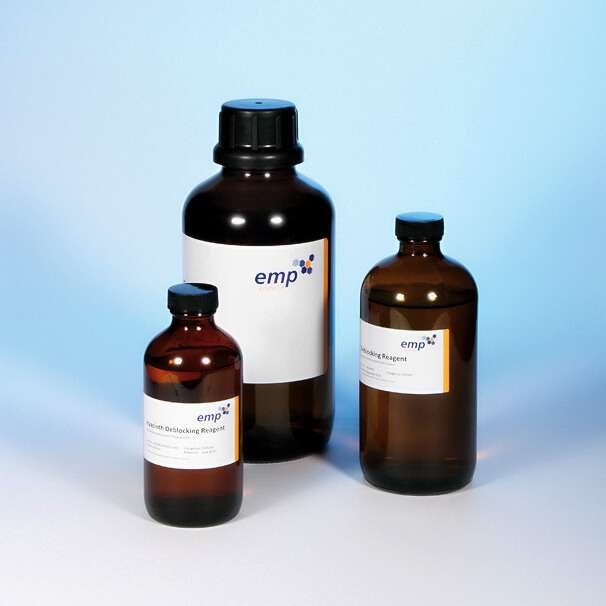
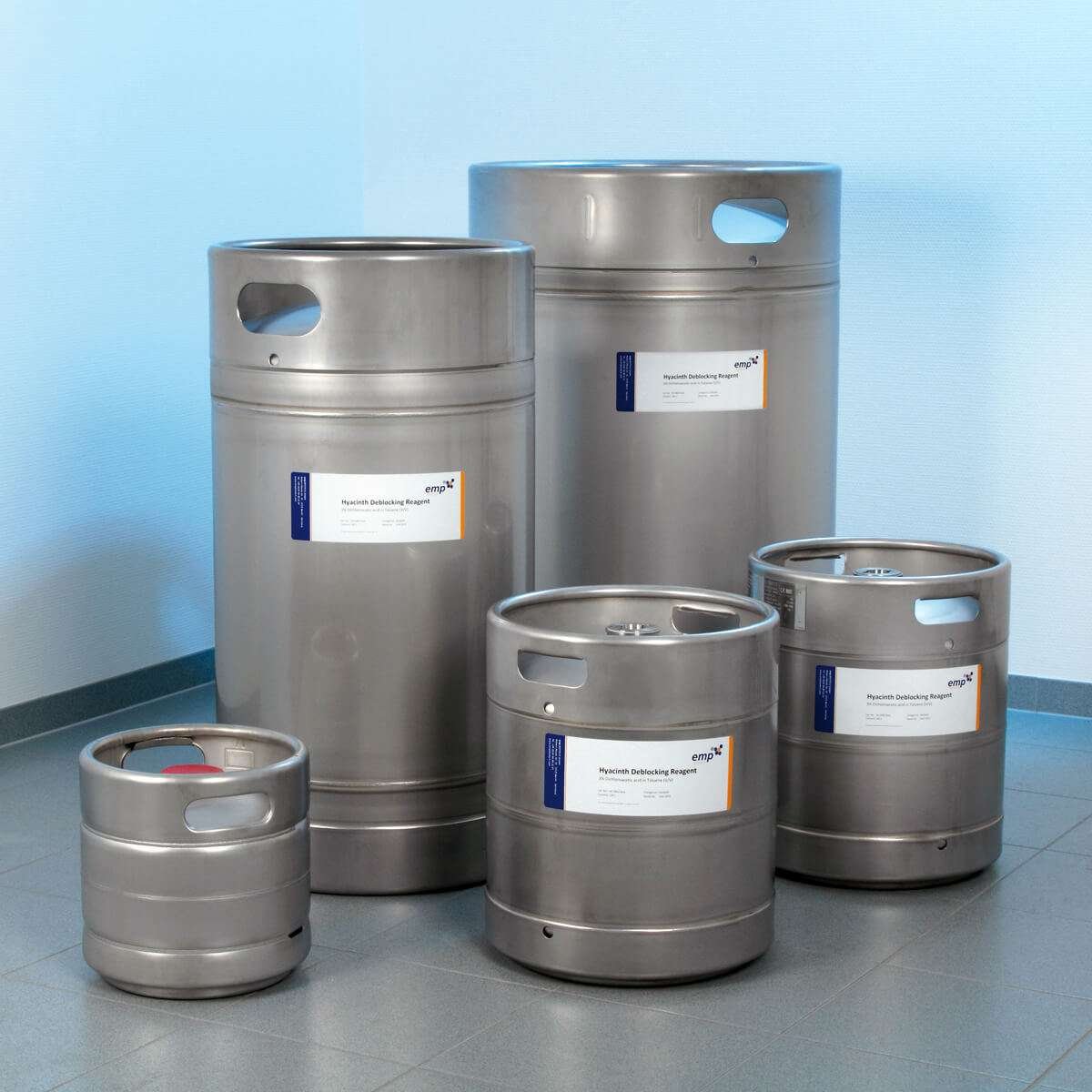
Capping Reagent A Lutidine – THF : 2,6-Lutidine : Acetic Anhydride (80:10:10 v/v/v)
Capping reagent A lutidine is a specialized formulation for oligonucleotide synthesis, composed of tetrahydrofuran (THF), 2,6-lutidine, and acetic anhydride in an 80:10:10 volume ratio. This capping reagent A is designed to efficiently acetylate unreacted 5’-hydroxyl groups, preventing the formation of deletion sequences.
-
Composition: THF : 2,6-lutidine : acetic anhydride (80:10:10 v/v/v)
-
Application: Capping reagent A lutidine for DNA/RNA synthesis
-
Function: Acetylation of unreacted 5’-OH termini
-
Instrument Compatibility: Suitable for manual and automated synthesizers
-
Format: Ready-to-use
Capping reagent A lutidine is particularly useful in workflows where 2,6-lutidine provides a gentler alternative to traditional capping reagents. Its formulation is trusted in high-fidelity oligo production environments.