

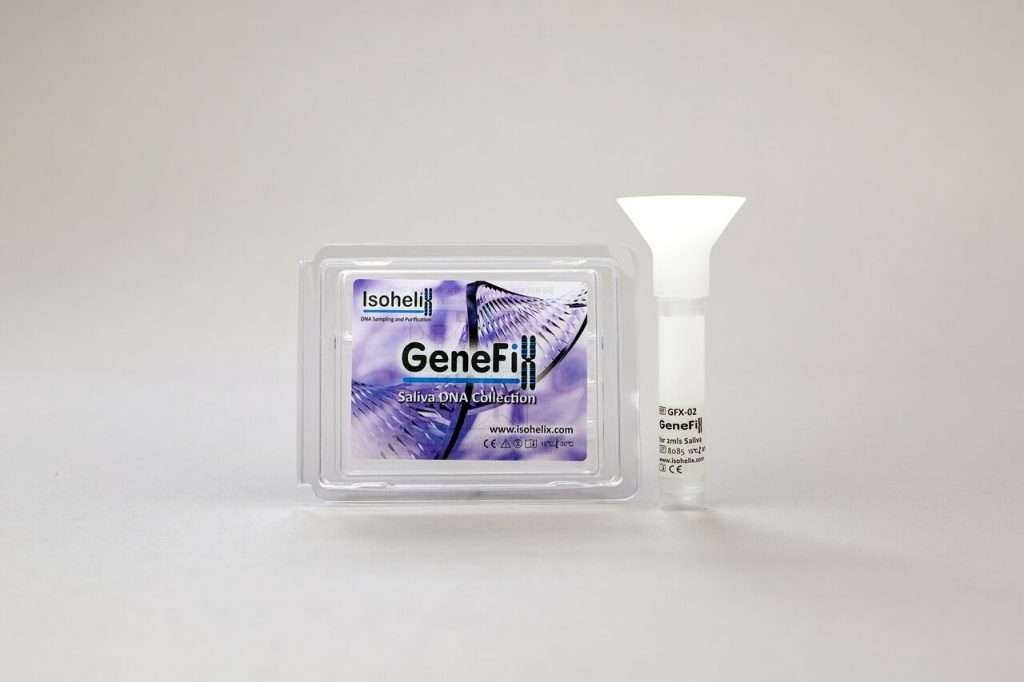
Collecting DNA From Saliva: a high-performance DNA sampling solution
DNA collection is often the first and most crucial step when conducting research and analysis in molecular biology. The quality of your research will depend on your ability to deliver accurate and reliable results, which in turn will require that you use techniques that give you maximal DNA yield from samples, with minimum contamination.
Saliva Sampling is a Convenient yet Effective Means of DNA Collection
While peripheral blood samples have long been considered the gold standard, their collection and transport present many challenges. Research units, especially those not linked directly with a clinical site, may benefit from saliva sampling for several reasons:
- Consent Considerations: Research participants and test subjects are more likely to consent to donating saliva compared with blood. There is no issue of needle-phobia, and the risk of complications such as haemorrhage or infection are non-existent. Furthermore, samples can be collected at home or any location that is convenient.1
- Affordable Sampling: The equipment and logistics required for blood samples are much more costly than those needed for salivary samples. Transport of saliva from the area of collection to the testing laboratory is less costly and can be done by regular shipping. In contrast, blood requires dry ice and immediate delivery.2
- Comparative Yield: Several studies have compared the yield of DNA obtained from similar quantities of blood and saliva. The amount of DNA obtained from saliva is comparable to blood, and the quality of DNA is also good.3
- Large Studies: Obtaining blood samples from a large number of subjects, as is often required for epidemiological studies, is both time consuming and expensive. Under such circumstances, salivary collection for DNA analysis may be the only practical option.1,3
The Clear Impact of Saliva Collection Kits
Not all methods of saliva collection are equal. The traditional swab and cytobrush methods of saliva collection yield samples that have high quantities of buccal epithelial cells and oral micro-organisms. On the other hand, whole saliva collection, that is more feasible with commercially available tubes, has been proven to yield 12 times more DNA as compared to the traditional methods.
Commercially available saliva collection kits, such as the GeneFix device, make the process of collecting saliva DNA faster, accurate, and more convenient when compared with plain saliva collection and processing.
There are two distinct ways in which commercial kits outrank plain saliva collection:
- Purification: Human saliva contains millions of micro-organisms, which can accidently contribute to an increased DNA yield from the sample. Saliva collection kits are usually equipped with agents that remove these contaminants, thereby leaving pure, human DNA for analysis. The amount of RNA is also reduced to a bare minimum.5
- Stabilization: As soon as saliva leaves the mouth, the DNA contained in it starts to degrade because of external influences such as temperature. Stabilization increases the shelf life of DNA in the saliva sample. By collecting the sample in a tube that already has a stabilizing agent, the degradation process can be prevented, and DNA in such samples has been shown to last as long as 187 days.6
Researcher Based in Denmark?
Try out the GeneFix DNA Saliva collector for free. Apply for your free sample here.
GeneFix Saliva DNA Collection Device: Salient Features
GeneFix is a high-performance saliva collection device for DNA. It has been designed for convenient collection from all age groups, including young children. The following features make it easy to use:
- The device has two volume options for sampling saliva – 2 ml and 1 ml tubes. Clear markings on the collecting tube indicate the amount of saliva collected.
- The collecting tube has a screw on funnel for convenient saliva collection, which can be replaced with a cap after collection.
- Assisted saliva collectors come with two absorbent swabs that assist in saliva collection from subjects who find it difficult to deliver saliva samples.
- The tube itself has a funnel design, which not only prevents buffer spillage, but also avoids backflow of collected saliva.
- The collection tube is leak-proof and designed to withstand physical pressures associated with transport of the sample.
- It is easy to process samples collected in these tubes, as they are designed for both manual and automated applications. The caps are compatible with auto de-capping machines.
- The tube comes with a pre-filled, non-toxic buffer that allows DNA stabilization for up to 60 days at room temperature.
GeneFix Saliva DNA Collection Device: Proven Reliability
The device has been shown to yield more than 100 µg of DNA from 2 ml of saliva. When treated with the GeneFix Saliva-prep kit, there is ultra-low RNA contamination of the DNA sample, with high quality of DNA isolated. There is no need to use an ethanol solvent, or filter columns. The reliability of these devices has been demonstrated in several demanding downstream applications. The following application notes have shown the efficacy of GeneFix collection devices in combination with GeneFix saliva isolation kits:
- GeneFix collectors were shown to provide adequate samples for multiplex ligation-dependent probe amplification assay (MLPA). MLPA requires higher DNA quality than most of the other downstream applications, which was provided by this method. The study also showed that the GeneFix system preserved saliva DNA quality for up to 12 months of storage.7
- DNA of high purity, integrity, and concentration was obtained from saliva collected and stabilized with the GeneFix collectors and then processed through either the column-based GMS kits or the precipitation-based GSP kits. This could be used efficiently with the Illumina HumanOmniExpress BeadChip for genome-wide association studies.8
- The efficacy of the GeneFix system has also been demonstrated in Array Comparative Genomic Hybridization (aCGH). This is an extremely sensitive technique, which requires DNA of the highest quality. Protein and RNA contaminants, and solvents used for purification, can interfere with the assay. Saliva collected and processed through the GeneFix system does not require ethanol clean-up, and this system was able to provide high quality and quantity of DNA for efficient aCGH analysis.9
REFERENCES
- Nishita D.M. et al. Clinical trial participant characteristics and saliva and DNA metrics. BMC Med Res Method. 9(71): 1-20 (2009)
- Abraham, J.E. et al. (2012). Saliva samples are a viable alternative to blood samples as a source of DNA for high throughput genotyping
- Koni AC, Scott RA, Wang G, Bailey ME, Peplies J, Bammann K et al. DNA yield and quality of saliva samples and suitability for large-scale epidemiological studies in children. Int J Obes2011; 35: S113-118
- Rogers NL, Cole SA, Lan H, Crossa A, Demerath EW. New Saliva DNA Collection Method Compared to Buccal Cell Collection Techniques for Epidemiological Studies. Am J Hum Biol. 19:319–326 (2007).
- Rylander-Rudqvist T, Håkansson N, Tybring G, Wolk A. Quality and quantity of saliva DNA obtained from the self-administrated oragene method -a pilot study on the cohort of Swedish men. Cancer Epidemiol Biomarkers Prev2006; 15(9): 1742-1745
- Iwasiow RM, Desbois A, Birnboim HC. Long-term stability of DNA from saliva samples stored in Oragene®self-collection kit. DNA Genotek 2011; www.dnagenotek.com; support@dnagenotek.com
- Gokhale D. Performance of Saliva DNA, stabilized in Isohelix GeneFix™ collectors, and isolated by GeneFix™ Saliva Preparation Kit on MLPA assay. Application Note No. GFX-1.1. Retrieved from: https://isohelix.com/wp-content/uploads/2018/01/GeneFix_MLPA_GSP.pdf
- Smith S. aCGH studies using GeneFix™ collected and purified saliva DNA Application Note No. GFX-4. Retrieved from: https://isohelix.com/wp-content/uploads/2018/01/aCGH_Studies.pdf
- Curtis C. Performance of Saliva DNA collected in GeneFiX™ Saliva Collectors and isolated with GeneFix Saliva DNA kits, genotyped on the Illumina HumanOmniExpress – 12 v1.1 BeadChip. Application Note No. GFX-2. Retrieved from: https://isohelix.com/wp-content/uploads/2018/01/GeneFix_Illumina_AppNote.pdf