Isothermal PCR (LAMP)
Isothermal PCR refers to a group of nucleic acid amplification techniques that enable DNA or RNA amplification at a constant temperature, eliminating the need for the temperature cycling used in traditional polymerase chain reaction (PCR). These methods rely on enzymes with strand displacement activity, allowing the amplification reaction to proceed continuously without repeated heating and cooling steps.
Isothermal amplification technologies have become increasingly important in modern molecular biology. They enable rapid detection of nucleic acids, simplified laboratory workflows, and molecular analysis in environments where access to complex equipment such as a thermocycler may be limited. Because amplification is carried out under stable temperature conditions, these techniques are particularly useful in point of care diagnostics, portable testing systems, and field settings.
At You Do Bio, we provide laboratory tools and reagents that support isothermal nucleic acid amplification, helping research teams perform reliable DNA amplification, detection of genetic targets, and genome analysis using modern amplification technologies.
What Is Isothermal Amplification?
Isothermal amplification refers to a family of nucleic acid amplification techniques that amplify DNA or RNA at a constant temperature. Unlike traditional PCR, which requires repeated thermal cycling to separate DNA strands, isothermal methods rely on enzymes capable of separating strands enzymatically.
The goal of isothermal nucleic acid amplification is to amplify target sequences efficiently without the need for complex instrumentation. Instead of alternating between high and low temperatures, these methods operate under stable reaction conditions.
In a typical amplification reaction, primers hybridize to the target nucleic acid sequence, and a DNA polymerase with strand displacement activity synthesizes new DNA strands while simultaneously displacing existing strands. This mechanism allows the reaction to proceed continuously, producing large amounts of amplified DNA.
Because amplification occurs under steady conditions, isothermal amplification methods are often faster and simpler to implement than traditional PCR workflows.
Mechanism of Isothermal Nucleic Acid Amplification
The key feature that distinguishes isothermal amplification of nucleic acids from PCR is the use of enzymes capable of strand displacement.
In PCR, DNA strands are separated by heating the reaction mixture to high temperatures. In contrast, isothermal amplification relies on a strand displacing DNA polymerase that can synthesize new DNA while pushing aside downstream strands.
The mechanism typically involves the following steps:
- Primers hybridize to the target sequence at a constant temperature
- A DNA polymerase with strand displacement activity begins synthesis
- Newly synthesized strands displace existing strands of DNA
- Additional primers bind to displaced strands
- The reaction continues through exponential amplification
Because this process occurs continuously, amplification can produce large amounts of DNA in a short time.
This enzymatic strategy removes the need for thermal cycling, allowing amplification reactions to be carried out using simple incubators or portable devices.
Differences Between PCR and Isothermal Amplification
Traditional polymerase chain reaction and isothermal amplification share the same goal: amplification of nucleic acids for detection and analysis. However, the mechanisms used by these approaches differ significantly.
PCR relies on repeated cycles of:
- high temperature DNA denaturation
- primer annealing
- DNA synthesis
These steps require a thermocycler, which precisely controls temperature changes throughout the reaction.
In contrast, isothermal PCR methods maintain a constant reaction temperature. Instead of thermal denaturation, DNA strands are separated enzymatically using strand displacement mechanisms.
Because of these differences, isothermal amplification offers several advantages:
- simplified equipment requirements
- faster reaction times
- compatibility with portable systems
- suitability for point of care diagnostics
These features make isothermal amplification technologies particularly valuable in decentralized testing environments.
Major Isothermal Amplification Methods
Several isothermal amplification methods have been developed to support different research and diagnostic applications. Each method uses a distinct mechanism for nucleic acid amplification.
Loop Mediated Isothermal Amplification (LAMP)
Loop mediated isothermal amplification (LAMP) is one of the most widely used isothermal nucleic acid amplification techniques.
LAMP uses multiple primers that create loop structures in the amplified DNA, enabling rapid and efficient exponential amplification. The reaction is typically performed using a strand displacing DNA polymerase and operates at a constant temperature between 60°C and 65°C.
One advantage of LAMP is that it is often performed as a single tube technique, minimizing contamination risk and simplifying workflows.
LAMP is frequently used in applications involving:
- rapid detection of pathogens
- environmental testing
- detection of SARS-CoV-2 and other viruses
- point-of-care molecular diagnostics
Because amplification products accumulate rapidly, detection can be performed using fluorescent detection or colorimetric detection systems.
Recombinase Polymerase Amplification (RPA)
Recombinase polymerase amplification (RPA) is another important isothermal amplification technique.
In recombinase polymerase amplification RPA, recombinase proteins facilitate primer binding to target DNA sequences. Once the primer is bound, a DNA polymerase extends the strand while displacing downstream DNA.
RPA operates at relatively low temperature, typically between 37°C and 42°C. This makes the technique particularly useful in portable systems and field settings where precise temperature control may be difficult.
RPA has been widely used in rapid detection methods, including pathogen detection and molecular diagnostics.
Helicase Dependent Amplification (HDA)
Helicase dependent amplification (HDA) is an isothermal amplification method that mimics the natural DNA replication process.
In helicase dependent amplification HDA, helicase enzymes actively separate strands of DNA, allowing primers to bind to the exposed template. Once primers hybridize, DNA polymerase extends the new strand.
This method enables DNA amplification without thermal denaturation.
HDA has been applied in various molecular detection workflows, including:
- diagnostic assays
- pathogen detection
- molecular analysis in point of care diagnostics
Rolling Circle Amplification (RCA)
Rolling circle amplification (RCA) is a technique designed for amplification of circular DNA templates.
In rolling circle amplification RCA, a primer hybridizes to a circular single stranded DNA template. A strand displacing DNA polymerase then continuously replicates the template, producing long DNA molecules composed of repeated sequence units.
Because the polymerase moves continuously around the circular template, RCA can generate large amounts of DNA from minimal starting material.
This method is widely used in:
- DNA detection methods
- molecular diagnostics
- biosensor development
- genomic research
Multiple Displacement Amplification (MDA)
Multiple displacement amplification (MDA) is a powerful technique for whole genome amplification.
MDA uses random primers and a highly processive DNA polymerase with strand displacement activity to replicate DNA continuously. As new strands are synthesized, additional priming events occur, leading to branched DNA structures.
This mechanism allows genome amplification from extremely small quantities of DNA.
MDA is widely used in:
- single-cell genomics
- microbial genome analysis
- genetic research
- sequencing workflows
When MDA is applied to amplify an entire genome, the process is referred to as whole genome amplification (WGA).
Enzymes Used in Isothermal Amplification
Several enzymes play central roles in isothermal nucleic acid amplification techniques.
One of the most widely used enzymes is Bst DNA polymerase, which possesses strong strand displacement activityand functions efficiently at moderate temperatures.
Another important enzyme is phi29 DNA polymerase, which is commonly used in multiple displacement amplificationand rolling circle amplification. Phi29 polymerase is highly processive and capable of producing long DNA products with high fidelity.
These enzymes enable continuous DNA synthesis without thermal denaturation, making them essential components of isothermal amplification reactions.
Applications of Isothermal Amplification
Because of their flexibility and simplicity, isothermal amplification methods have been applied in many areas of molecular biology.
Common applications include:
- detection of infectious diseases
- environmental monitoring
- genetic testing
- pathogen detection in agriculture
- forensic analysis
In particular, isothermal amplification technologies are widely used for rapid detection of nucleic acids in settings where traditional PCR equipment is unavailable.
These technologies support point of care diagnostics, enabling molecular testing outside centralized laboratories.
Isothermal amplification has also been integrated into portable diagnostic devices used in field settings, allowing researchers to perform molecular analysis in remote locations.
Advantages of Isothermal PCR
Compared with traditional PCR, isothermal PCR methods offer several advantages.
First, amplification occurs at a constant temperature, removing the need for a thermocycler. This simplifies laboratory equipment requirements and reduces instrument costs.
Second, many isothermal amplification reactions produce results rapidly, often within less than an hour.
Additional benefits include:
- simplified experimental setup
- compatibility with portable instruments
- high sensitivity for detection of nucleic acids
- suitability for rapid detection methods
Because of these features, isothermal amplification technologies have become valuable tools in molecular diagnostics and research.
Isothermal Amplification Products from You Do Bio
At You Do Bio, we support laboratories working with isothermal nucleic acid amplification by providing high-quality reagents and laboratory tools designed for modern molecular workflows.
Our product range supports workflows involving:
- loop mediated isothermal amplification (LAMP)
- recombinase polymerase amplification (RPA)
- helicase dependent amplification (HDA)
- rolling circle amplification (RCA)
- multiple displacement amplification (MDA)
These technologies enable researchers to perform sensitive DNA amplification, detection of nucleic acids, and genome analysis using simplified reaction systems.
If you need assistance selecting products for your isothermal amplification workflow, our team can help identify solutions suited to your experimental design and molecular analysis requirements.
FAQ
What is isothermal PCR?
Isothermal PCR refers to amplification techniques that amplify nucleic acids at a constant temperature rather than using thermal cycling. These methods rely on enzymes with strand displacement activity to continuously synthesize DNA.
How does isothermal amplification work?
Isothermal amplification works by using a DNA polymerase with strand displacement activity that synthesizes DNA while separating strands enzymatically. This allows continuous amplification without the need for a thermocycler.
What are the advantages of isothermal amplification?
Advantages include simplified instrumentation, rapid detection, compatibility with portable systems, and efficient amplification of nucleic acids.
What are the most common isothermal amplification methods?
Common techniques include loop mediated isothermal amplification (LAMP), recombinase polymerase amplification (RPA), helicase dependent amplification (HDA), rolling circle amplification (RCA), and multiple displacement amplification (MDA).


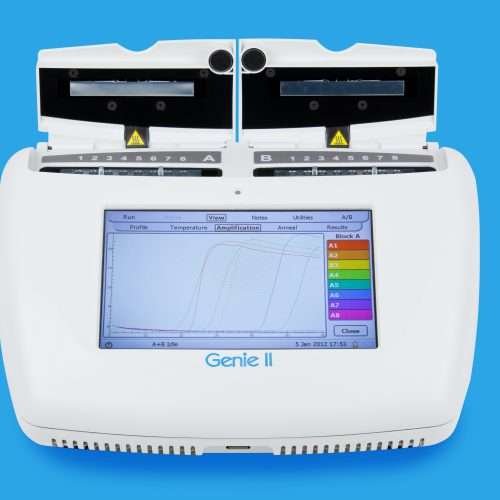
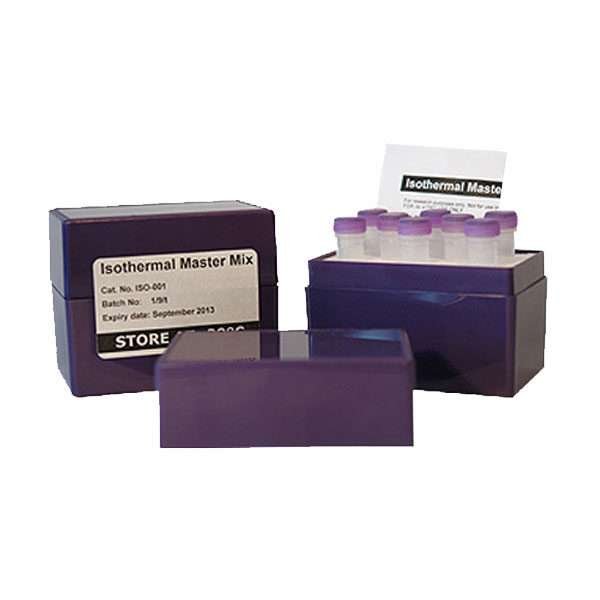
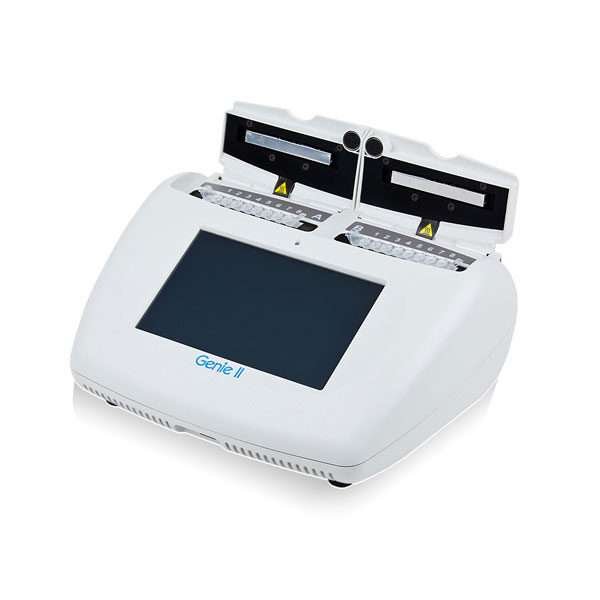
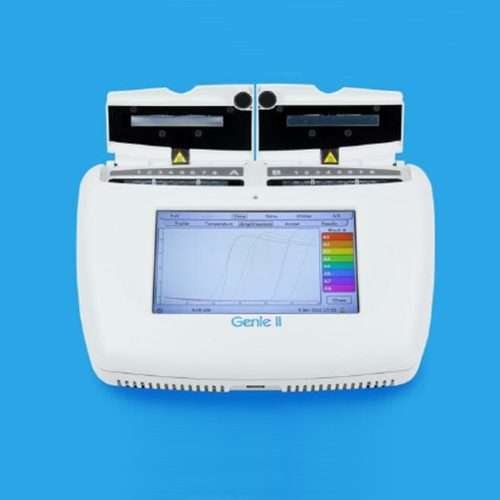
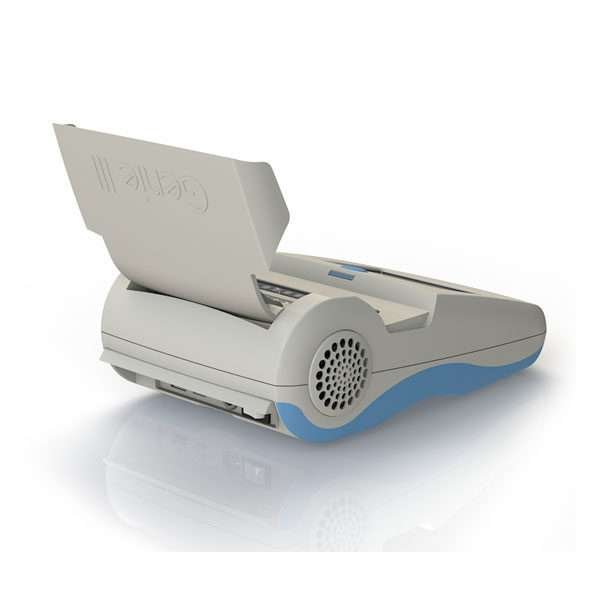
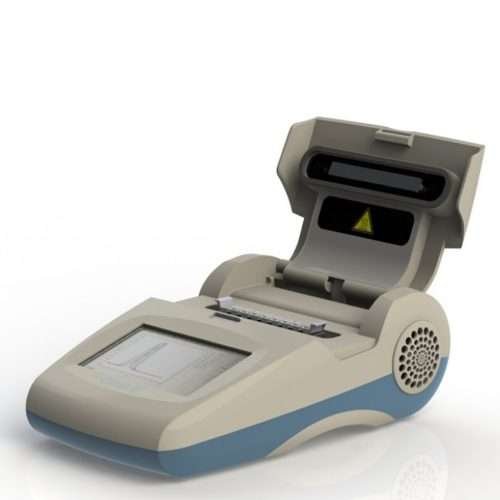
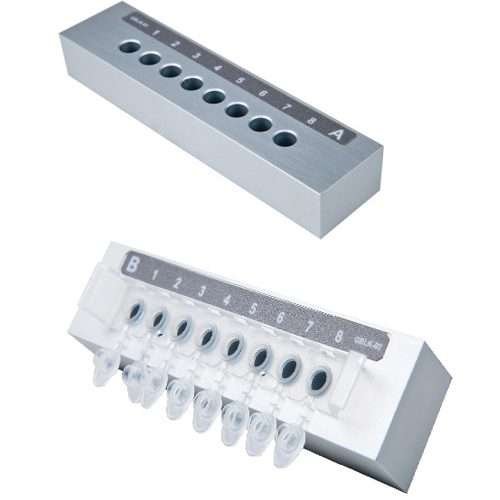
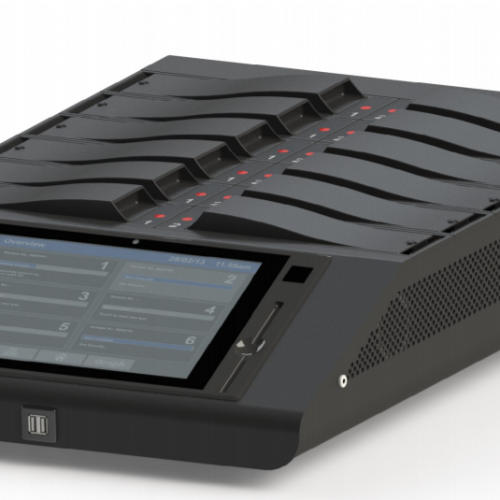 Isothermal Instruments
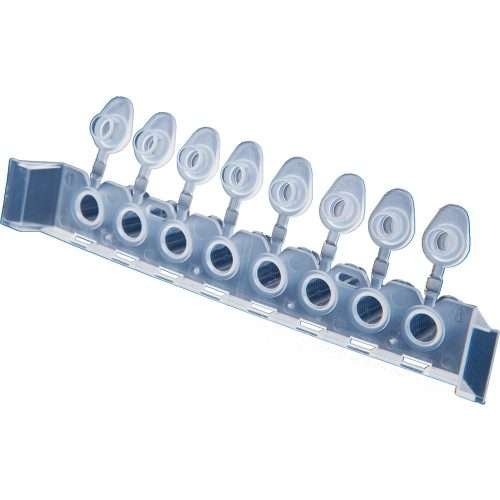 Isothermal PCR (LAMP)