

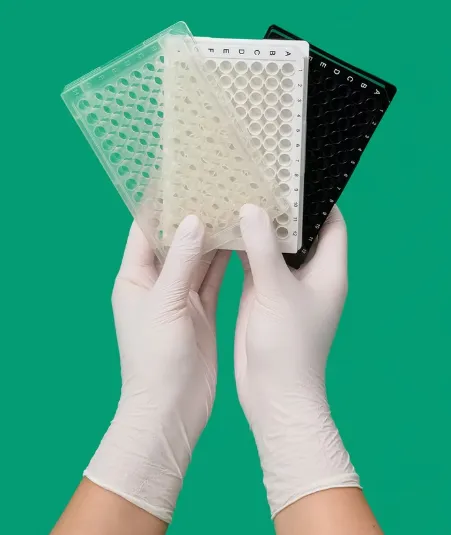
Laboratories depend heavily on 96-well plates for quantification assays, screening campaigns, ELISAs, fluorescence and luminescence measurements, and general high-throughput workflows. Traditionally these plates are made from petroleum-derived polystyrene — reliable, but carbon-intensive, and a major contributor to single-use plastic waste.
Green Elephant Biotech has introduced a viable alternative: precision-moulded 96-well plates manufactured from 100% plant-based PLA (polylactic acid). For those with a focus on developing sustainable labs, these plates offer a straightforward way to reduce the environmental impact of routine workflows.
Key Advantages for Sustainable Labs
- Lower carbon footprint, same microplate footprint: PLA production emits significantly less CO₂ than traditional plastics made from fossil resources. The plates maintain standard dimensions and clear/white/black optical properties, ensuring compatibility with plate readers, automated handlers, and imaging systems.
- Broad assay suitability: Supports colorimetric, fluorometric, chemiluminescent, and binding assays.
- Renewable and plant-derived: PLA sourcing avoids reliance on petroleum and contributes to circular-economy principles.
This makes the plates ideal for institutions implementing green-lab guidelines, sustainability metrics, or procurement policies prioritizing low-impact consumables.
Availability in Scandinavia
You Do Bio now distributes these microplates to research groups across the region. To support evaluation and validation, we provide free sample packs of each plate format. Researchers can explore the range and request samples directly via our dedicated Green Lab Solutions page:
https://www.youdobio.com/product-category/green-lab-solutions/
By integrating PLA microplates into daily workflows, researchers can make measurable progress towards achieving their goals for sustainable labs — without changing instruments, protocols, or data quality expectations.