Desalting Columns
Desalting columns are essential tools in modern molecular biology, protein purification, and biochemical analysis. These columns allow researchers to perform desalting and buffer exchange quickly and efficiently, enabling the removal of salts and small molecules from biological samples without compromising protein structure or nucleic acid integrity.
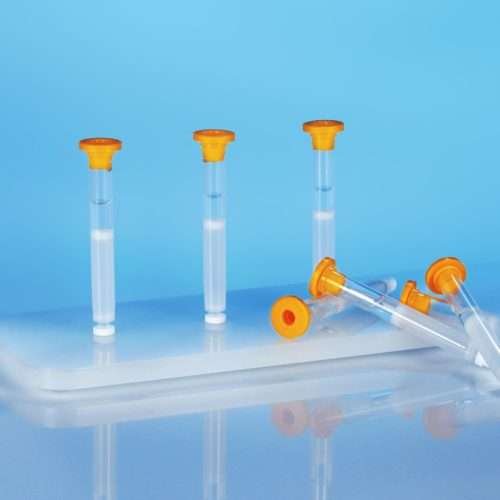
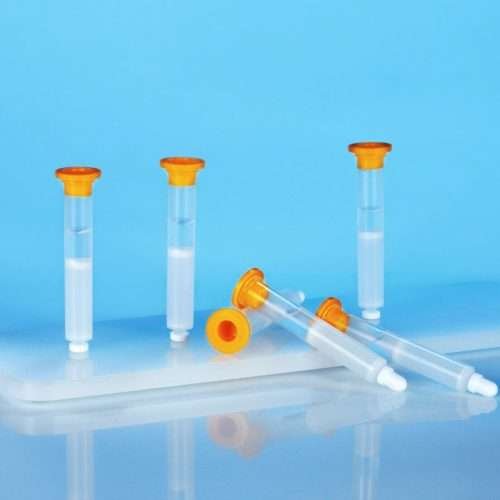
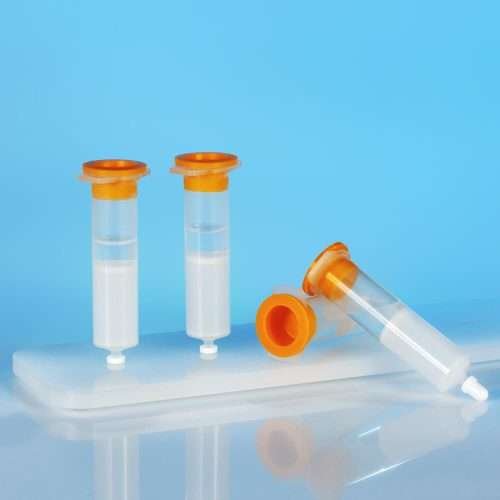
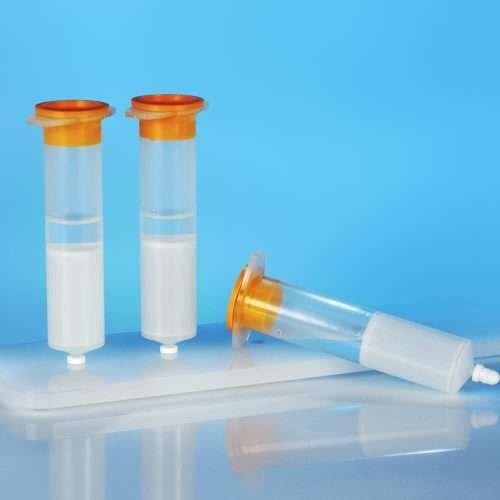
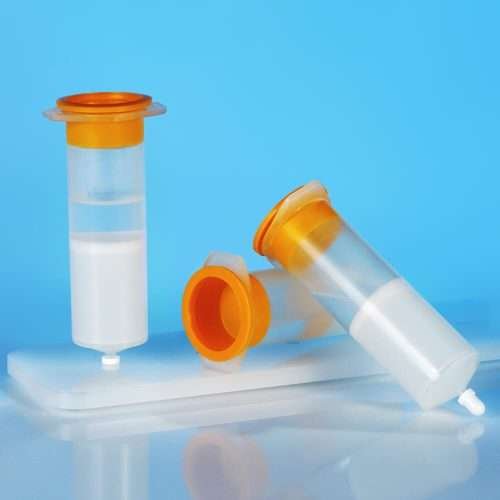
At You Do Bio, we provide a broad selection of desalting columns designed for different laboratory workflows, including spin columns, gravity flow columns, chromatography cartridges, and 96-well plate formats. These systems allow laboratories to perform reliable desalting and buffer exchange across a wide range of sample volumes, from small micro-preparation experiments to high-throughput screening applications.
All columns are packed with Zetadex, a high-performance dextran resin manufactured by emp Biotech and equivalent to other widely used gel filtration resins. This proprietary resin matrix ensures consistent separation of salts and small molecules from proteins, nucleic acids, and other biomolecules.
What Is a Desalting Column?
A desalting column is a laboratory tool used to separate large biomolecules from smaller components in a solution. These columns are commonly used for desalting and buffer exchange, removing unwanted salts, dyes, linkers, cofactors, and other small molecules that may interfere with downstream experiments.
A typical desalting column contains a porous gel filtration matrix, such as a dextran resin, polyacrylamide resin, or proprietary resin. The matrix forms a network of beads containing pores of defined size.
When a sample is applied to the column, separation begins based on molecular size. Large biomolecules, such as proteins or nucleic acids, are unable to enter the pores of the resin. Instead, they move rapidly through the column and elute in or near the void volume.
Smaller molecules such as salts or buffer components can enter the pores of the matrix beads. Because these molecules diffuse into the internal pore structure of the beads, they follow a longer path through the column and therefore elute later.
This difference in migration speed allows desalting columns to separate macromolecules from salts and small molecules efficiently.
Principles of Desalting and Buffer Exchange
The separation performed by a desalting column relies on the physical principles of size exclusion chromatography, also known as gel filtration chromatography.
In this technique, molecules are separated based on their size and molecular weight, rather than chemical binding interactions.
When a sample enters the column, the following process occurs:
- Large biomolecules remain outside the resin pores and move quickly through the column.
- Smaller molecules diffuse into the pores of the gel matrix.
- These small molecules take a longer path through the column and are therefore retained longer.
The point at which molecules exit the column depends on the exclusion limit of the resin. The exclusion limit represents the largest molecular size that can enter the pores of the gel matrix.
Because proteins and nucleic acids are typically much larger than salts or metabolites, desalting columns are particularly effective for separating these molecules.
Gel Filtration and Size Exclusion Chromatography
In size exclusion chromatography, separation occurs through physical filtration within the porous resin matrix.
The beads inside the column act like microscopic filters. When molecules move through the column:
- large molecules are excluded from the pores
- small molecules enter the pores
- separation occurs based on molecular size and diffusion into the pores of the matrix
This technique is commonly used in two modes.
Desalting Mode
Large biomolecules are separated from salts and small molecules.
Fractionation Mode
Multiple biomolecules of different sizes are separated based on molecular weight.
Desalting columns are optimized specifically for the first case.
Why Desalting and Buffer Exchange Are Important
In molecular biology and protein chemistry, salts and small molecules can interfere with downstream experimental workflows.
For example, high salt concentrations can disrupt:
- enzyme activity
- PCR reactions
- nucleic acid hybridization
- protein–protein interactions
- chromatography experiments
- mass spectrometry analysis
Therefore, desalting and buffer exchange are essential preparation steps before many biochemical assays.
A desalting column enables researchers to transfer biomolecules into a new buffer environment while removing interfering molecules.
This process can typically be completed in only a few minutes, making desalting columns significantly faster than traditional techniques such as dialysis.
Applications of Desalting Columns
Desalting columns can be used across a wide range of scientific applications involving proteins and nucleic acids.
Common applications include:
- removal of salts from protein samples
- removal of low molecular weight molecules
- buffer exchange before enzymatic assays
- preparation of nucleic acids for sequencing
- removal of primers from PCR reactions
- removal of nucleotides such as dNTPs
- purification of labeled proteins or nucleic acids
- cleanup of sequencing reactions
Because desalting columns rely on physical size exclusion rather than binding chemistry, they can be used in many experimental contexts.
Desalting Protein Samples
One of the most common uses of desalting columns is the preparation of protein samples.
Proteins are often purified in buffers containing high salt concentrations or stabilizing agents. Before further experiments can be performed, these buffers may need to be replaced.
Desalting columns allow researchers to perform buffer exchange rapidly while maintaining protein structure and biological activity.
Typical workflows include:
- protein purification after affinity chromatography
- preparation of proteins for enzymatic assays
- sample preparation before mass spectrometry
- removal of inhibitors or cofactors
Because desalting columns rely on size exclusion rather than binding chemistry, they generally preserve protein folding and biological function.
Desalting Nucleic Acid Samples
Desalting columns are also widely used in molecular biology workflows involving nucleic acids.
DNA and RNA samples often contain salts, enzymes, nucleotides, or other reagents from previous reactions.
Desalting columns can be used to remove:
- primers and primer-dimers
- unincorporated nucleotides
- dye terminators from sequencing reactions
- residual salts from purification steps
By removing these contaminants, researchers can improve the quality of downstream molecular biology experiments.
Types of Desalting Columns
Different experimental workflows require different column formats. At You Do Bio, we provide several types of desalting columns designed for specific laboratory needs.
Spin Columns
Spin columns are widely used for small sample volumes and rapid desalting workflows.
In a spin column, the resin matrix is packed into a small cartridge placed inside a centrifuge tube. When the sample is applied and centrifuged, molecules move through the column under centrifugal force.
Spin columns offer several advantages:
- fast processing times
- minimal hands-on steps
- excellent recovery of small sample volumes
For many molecular biology applications, spin columns are the preferred format for desalting and buffer exchange.
Gravity Flow Columns
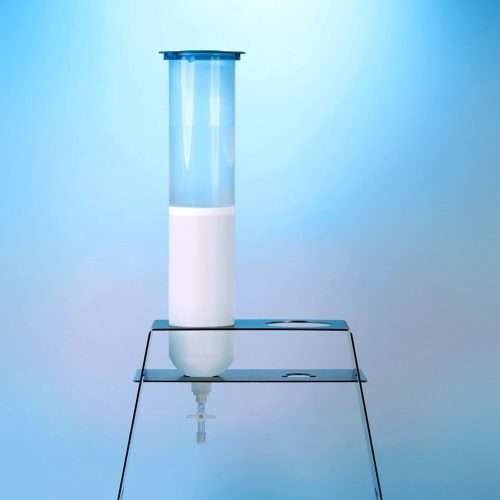
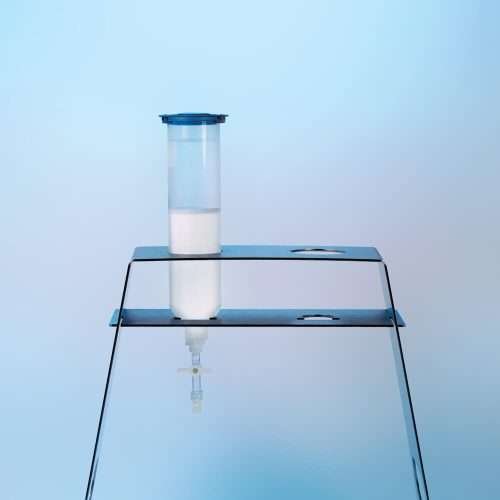
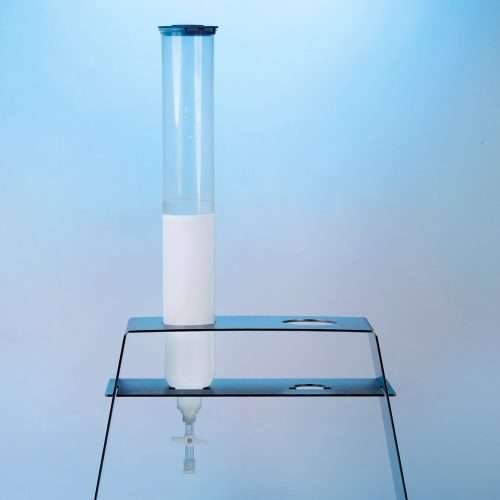
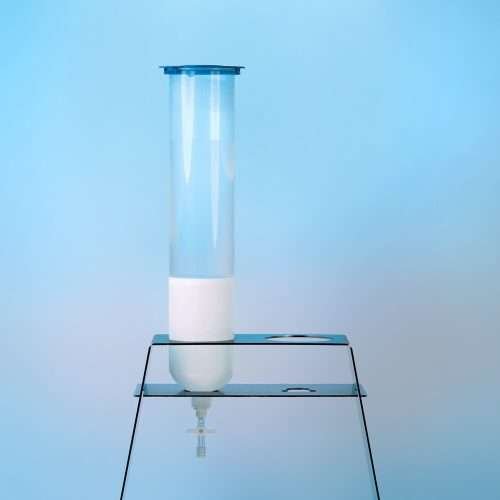
A gravity flow column operates without centrifugation or pressure. Instead, the sample moves through the resin bed under the force of gravity.
This format is particularly useful for:
- larger sample volumes
- delicate protein samples
- workflows where minimal mechanical stress is required
Gravity flow columns also provide excellent sample recovery and can be easily integrated into laboratory workflows.
96-Well Plates for High-Throughput Desalting
In high-throughput laboratories, desalting is often performed using 96-well plate formats.
These plates contain multiple miniature desalting columns arranged in parallel wells. Each well functions as an independent gel filtration column.
Advantages of this format include:
- simultaneous processing of many samples
- compatibility with laboratory automation
- reduced processing time for screening experiments
High-throughput desalting plates are commonly used in genomics, drug discovery, and large-scale protein studies.
Selecting the Right Desalting Column
Choosing the appropriate desalting column depends on several factors.
Molecular Weight Cutoff and Exclusion Limit
The molecular weight cutoff or exclusion limit of the resin determines which molecules can enter the pores.
If the biomolecule of interest is larger than the exclusion limit, it will be excluded from the pores and will elute quickly.
Selecting the correct cutoff ensures that proteins or nucleic acids remain separated from salts and other small molecules.
Sample Volume and Column Volume
Another important factor is the volume of the sample relative to the volume of the column.
To achieve optimal desalting performance:
- the sample volume should match the column capacity
- excessive loading should be avoided
- column volume should be selected according to sample size
Proper matching of sample volumes and column volume ensures consistent results.
Zetadex Resin Technology
All desalting columns provided by You Do Bio are filled with Zetadex, a high-quality dextran resin manufactured by emp Biotech.
Dextran resins are widely used in gel filtration because they provide:
- highly reproducible pore structures
- consistent molecular weight cutoffs
- excellent chemical stability
- compatibility with biological samples
The Zetadex matrix allows reliable separation of proteins, nucleic acids, and other biomolecules from salts and contaminants.
Advantages of Desalting Columns in Modern Research
Compared with alternative purification methods, desalting columns offer several advantages.
Key benefits include:
- rapid desalting and buffer exchange
- high recovery of protein samples
- compatibility with many biomolecules
- minimal sample loss
- easy integration with automated workflows
Because of these advantages, desalting columns have become a standard tool in biochemical laboratories.
Desalting Columns from You Do Bio
At You Do Bio, we provide a wide range of desalting columns designed to support modern research workflows.
Our portfolio includes:
- spin desalting columns
- gravity flow columns
- chromatography cartridges
- 96-well desalting plates
- column racks for workflow integration
All products are packed with Zetadex dextran resin and are designed to deliver reliable desalting and buffer exchangefor both protein and nucleic acid samples.
If you need assistance selecting the correct column format for your workflow, our team can help determine the best solution based on sample volume, molecular weight cutoff, and downstream applications.


 Desalting Columns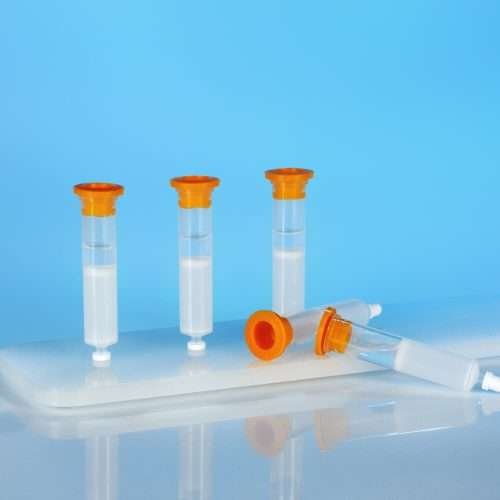
 Desalting Columns
 Desalting Columns