
Showing all 6 resultsSorted by latest
Magnetic Beads
For Advanced Sample Preparation and Molecular Workflows
Magnetic beads are essential tools for modern laboratory workflows, enabling efficient magnetic separation, purification, and isolation of nucleic acids, proteins, and other biomolecules of interest. Using magnetic beads allows researchers to streamline sample preparation while improving precision, reproducibility, and scalability across genomics and proteomics applications.
At You Do Bio, our range of magnetic beads is designed to support your application needs, from DNA and RNA purification to protein purification and cell-based workflows. These products are optimized for performance, offering low non specific binding, consistent characteristics, and reliable handling across a wide range of laboratory environments.
What Are Magnetic Beads?
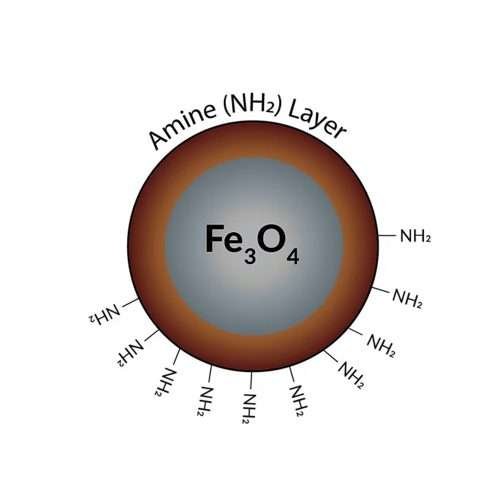
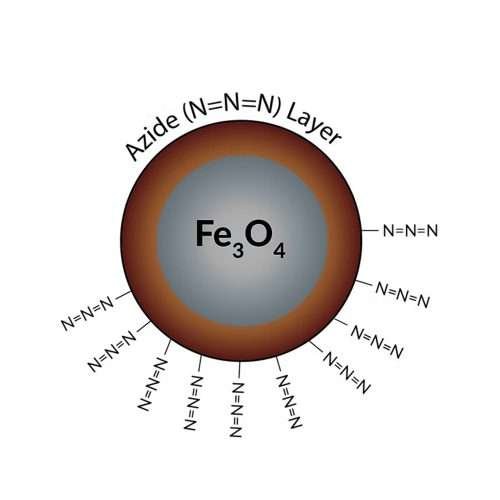
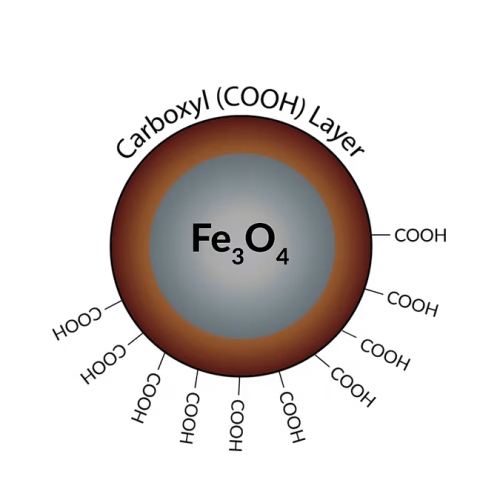
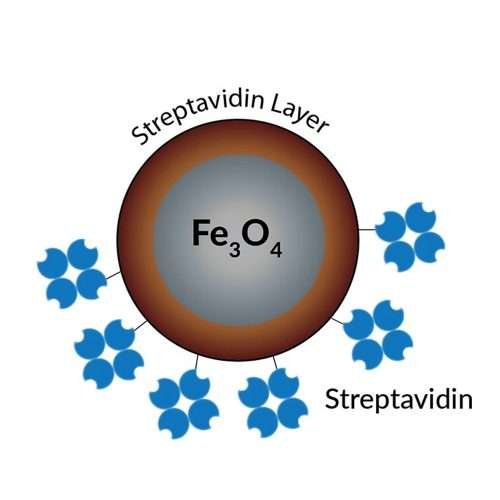
Magnetic beads are small particles composed of a magnetic core, typically iron oxide, combined with a functional coating that enables binding to biomolecules. Magnetic beads typically exhibit superparamagnetic properties, meaning they respond strongly to a magnetic field but do not retain residual magnetization once the field is removed.
Magnetic beads are used in laboratory workflows because they respond to a magnetic field, allowing rapid separation without vacuum or centrifugation. When exposed to a magnetic field, magnetic beads rapidly migrate toward the magnet, enabling efficient separation from a mixture.
Magnetic beads are available in various sizes, coating types, and functional formats, making them suitable for a range of applications including nucleic acid purification, protein purification, and cell isolation.
How Magnetic Beads Work
Using magnetic beads involves a combination of binding chemistry and magnetic separation. Magnetic beads bind target molecules depending on their surface coating and the buffer conditions used during the protocol.
Binding occurs under specific conditions, including optimized salt concentration and pH. Silica-coated magnetic beads bind nucleic acids such as genomic DNA, mitochondrial DNA, and other DNA fragments under specific buffer conditions, typically involving chaotropic salts or polyethylene glycol (PEG) and salt. This interaction is reversible, allowing controlled binding and release during purification workflows.
In protein workflows, affinity-coated magnetic beads bind proteins through specific ligand interactions, enabling selective purification from complex mixtures.
Magnetic Bead Workflow
- Binding
Magnetic beads bind nucleic acids and other biomolecules of interest under optimized buffer conditions. - Magnetic separation
A magnetic field is applied, causing the magnetic beads to migrate and concentrate against the side of the tube. - Washing
Contaminants are removed while the beads remain immobilized. - Elution
Target molecules are released using an appropriate elution buffer.
This workflow enables efficient purification of nucleic acids and protein samples while reducing or eliminating the need for centrifugation in many workflows.
Size Selection Using Magnetic Beads
Magnetic beads play a critical role in size selection workflows, particularly in genomics and sequencing applications.
Size selection using magnetic beads is controlled by adjusting the ratio between beads and sample, as well as buffer composition, typically involving PEG and salt concentration. Under these conditions, DNA fragments within a specific size range selectively bind to the beads, while smaller or larger fragments remain in solution.
This approach is widely used in:
- next-generation sequencing (NGS) workflows
- DNA library preparation
- PCR cleanup and fragment selection
Size selection enables precise control over DNA fragment distribution, improving quantitation and analysis in downstream applications.
Types of Magnetic Beads and Surface Coatings
Magnetic beads are available with different coating types, allowing researchers to customize workflows for specific applications.
Silica-Coated Magnetic Beads
Used for nucleic acid purification, including genomic DNA and DNA RNA workflows. These beads support reversible binding under optimized buffer conditions and enable efficient isolation of nucleic acids.
Carboxyl and Polymer-Coated Beads
Provide low non specific binding and are suitable for general sample preparation and cleanup workflows.
Affinity-Coated Magnetic Beads
Designed for protein purification or cell capture. These beads use ligands such as antibodies or streptavidin to bind specific targets.
Custom Magnetic Beads
Custom coating options are available to meet your needs and optimize performance for specialized protocols and applications.
Applications of Magnetic Beads
Magnetic beads can be used across a wide range of laboratory applications.
Nucleic Acid Purification
Magnetic beads are widely used for purification of nucleic acids, including genomic DNA, mitochondrial DNA, and other DNA fragments. They support DNA RNA workflows and enable efficient isolation of nucleic acid samples.
Protein Purification
Magnetic beads support protein purification through affinity binding, enabling selective capture and separation of proteins from complex mixtures.
Cell Isolation
Magnetic beads can be used to isolate specific cell populations based on surface markers, supporting applications in cell biology and immunology.
Genomics and Proteomics
Magnetic beads are widely used in genomics and proteomics for quantitation and analysis, sample preparation, and high-throughput workflows.
Advantages of Using Magnetic Beads
Using magnetic beads provides several advantages compared to traditional purification methods.
Reduced Dependence on Centrifugation
Magnetic separation reduces or eliminates the need for vacuum or centrifugation in many workflows, simplifying laboratory procedures.
High Precision and Reproducibility
Magnetic beads allow precise control of binding and elution steps, helping improve reproducibility across experiments.
Scalable Workflows
Magnetic beads are suitable for both small-scale and high-throughput applications.
Flexible and Customizable
With various coating and functional options available, magnetic beads can be customized for your application.
Magnetic Properties and Separation Performance
The magnetic properties of magnetic beads determine how efficiently separation occurs. When exposed to a magnetic field, the beads respond rapidly, allowing quick isolation of bound molecules.
The strength of the magnetic field influences separation speed and performance. Magnetic beads are designed to respond consistently to a magnetic field, ensuring reliable separation across workflows.
This controlled behavior enables precise handling of samples and improves workflow efficiency.
Choosing the Right Magnetic Beads
Selecting the appropriate magnetic beads depends on your research and application requirements.
Binding Chemistry
Choose beads with the correct coating for your target molecule, such as nucleic acids or proteins.
Sample Type
Consider whether your samples include DNA, RNA, proteins, or cells.
Workflow Requirements
Evaluate protocol conditions, including buffer composition, elution buffer compatibility, and sample preparation steps.
Performance Characteristics
Look for properties such as low non specific binding, consistent bead size, and optimized binding efficiency.
Product Range and Availability
At You Do Bio, magnetic beads are available in a range of formats designed to meet your needs.
Products include:
- beads for nucleic acid purification
- beads for protein purification
- beads for cell capture
- custom bead solutions
Each product page provides detailed information about characteristics, coating, and protocol compatibility. You can proceed to checkout directly from the product page and select the solution best suited for your application.
Magnetic Beads for Your Research
Magnetic beads support advanced research workflows across various scientific fields. Whether your focus is genomics and proteomics or cell biology, these products help improve sample preparation, separation, and analysis.
Using magnetic beads enables laboratories to achieve higher precision, improved workflow efficiency, and reliable results across a wide range of applications.
FAQ
What are magnetic beads used for?
Magnetic beads are used for purification, isolation, and separation of nucleic acids, proteins, and other biomolecules of interest.
How do magnetic beads bind DNA?
DNA binds to the bead surface under specific buffer conditions, often involving salt or PEG, after which a magnetic field enables separation.
What is size selection with magnetic beads?
Size selection is a process where magnetic beads selectively bind DNA fragments of specific sizes based on bead-to-sample ratio and buffer conditions.
Are magnetic beads suitable for all workflows?
Magnetic beads are suitable for a wide range of applications but should be selected based on protocol requirements and target molecules.