
Showing 1–16 of 20 resultsSorted by latest
Protein Labeling Kits
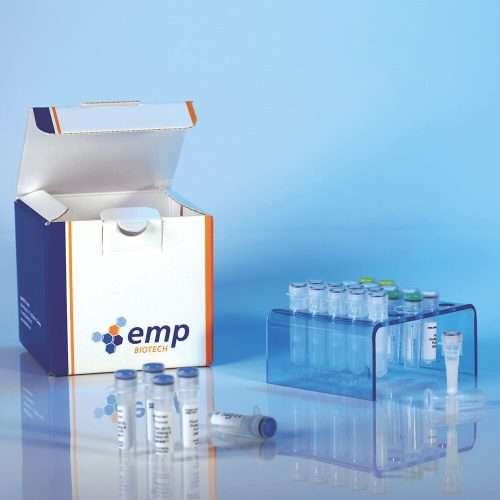
Protein labeling kits provide researchers with practical tools for tagging and detecting proteins in a wide range of laboratory workflows. At You Do Bio, our protein labeling kits are designed to support modern research applications where proteins must be visualized, tracked, or analyzed using reliable detection methods.
These kits contain carefully selected reagents that allow scientists to label proteins quickly and efficiently. By using optimized labeling chemistry, the kits make it possible to attach fluorescent or colorimetric markers to purified protein samples, antibodies (antistoffer), or other biological molecules. This allows proteins to be detected through emission signals, imaging systems, or analytical assays.
Researchers can explore our products to find solutions suitable for Western analysis, ELISA assays, flow cytometry, fluorescence imaging, FISH techniques, and more. Each kit is developed to provide stable reagents, clear protocols, and consistent labeling performance across experiments.
Why Protein Labeling Matters in Modern Research
Protein labeling is an essential technique in molecular biology and biochemical research. By attaching detectable markers to proteins, scientists can track protein behavior, identify protein interactions, and measure protein expression levels in complex biological systems.
Protein labeling kits simplify this process by providing ready-to-use reagents that streamline labeling workflows. Instead of assembling multiple components individually, researchers can rely on a complete kit that contains the required buffers, labeling reagents, and instructions.
These kits support research areas including:
- cellular biology
- immunology
- biochemical analysis
- protein interaction studies
- diagnostic assay development
Protein labeling plays a critical role in experimental workflows where proteins must be detected with high sensitivity and accuracy.
How Protein Labeling Kits Work
Protein labeling kits allow researchers to attach detectable markers to protein molecules. The labeling process typically involves a chemical reaction between the labeling reagent and specific functional groups on the protein surface.
In many labeling systems, reactive groups interact with amino acid residues such as lysine or cysteine. This reaction forms a stable bond between the protein and the labeling molecule. Once labeled, the protein can be detected using fluorescence emission, colorimetric signals, or other analytical systems.
The basic workflow generally includes the following steps:
- Preparation of the protein sample – purified protein or antibodies are prepared in a compatible buffer.
- Addition of labeling reagent – the reagent in the kit reacts with the protein.
- Incubation – the reaction proceeds under controlled conditions.
- Purification or stabilization – excess reagent is removed or neutralized.
After labeling, the modified protein can be used in downstream applications such as western blot analysis, ELISA detection, or fluorescence imaging.
Applications of Protein Labeling Kits
Protein labeling kits are used in many laboratory workflows where proteins must be detected or visualized. Because these kits support multiple labeling chemistries and detection systems, they are suitable for diverse research applications.
Common applications include:
Western analysis
Protein labeling allows researchers to detect proteins in western blot experiments. Labeled proteins or antibodies can generate detectable signals that help identify target proteins in complex samples.
ELISA assays
In ELISA workflows, labeled proteins or antibodies generate signals that allow researchers to measure protein concentration or binding interactions.
Flow cytometry
Protein labeling supports flow cytometry experiments where fluorescent emission signals are used to detect labeled proteins in cells.
Fluorescence imaging
Labeled proteins can be visualized using fluorescence microscopy systems, allowing researchers to observe protein localization and dynamics.
FISH techniques
Protein labeling reagents can also support workflows involving fluorescence in situ hybridization (FISH) or other imaging systems used to analyze biological samples.
These applications demonstrate how protein labeling kits support modern laboratory research across many scientific disciplines.
Advantages of Using Protein Labeling Kits
Protein labeling kits provide several advantages compared to manual labeling protocols. By combining optimized reagents and protocols in a single system, these kits simplify protein labeling workflows and reduce experimental variability.
Key advantages include:
- convenient, ready-to-use reagents
- reliable labeling efficiency
- compatibility with common laboratory systems
- reproducible results across experiments
- simplified workflows for protein analysis
These benefits make protein labeling kits valuable tools for laboratories working with proteins in research and analytical environments.
Protein Labeling for Antibodies and Purified Proteins
Many protein labeling kits are designed for labeling purified proteins and antibodies. Antistoffer, for example, can be labeled with fluorescent dyes or enzymatic markers to improve detection in immunoassays.
When antibodies are labeled, they can be used directly in detection systems such as ELISA or western blot workflows. This allows researchers to track target proteins with improved sensitivity and signal clarity.
Similarly, purified proteins can be labeled for use in binding studies, cellular experiments, or imaging workflows. These labeling strategies help scientists investigate protein behavior in biological systems.
Storage and Stability of Protein Labeling Kits
Proper storage (opbevaring) is important to maintain the stability of protein labeling reagents. Each kit includes information about recommended storage conditions to ensure long-term reagent performance.
Many labeling reagents should be stored at controlled temperatures and protected from light. Maintaining appropriate storage conditions helps preserve labeling efficiency and ensures consistent experimental results.
You Do Bio products are designed with stable formulations that support reliable performance throughout the recommended storage period.
Choosing the Right Protein Labeling Kit
Selecting the correct protein labeling kit depends on several experimental factors, including the protein type, detection system, and downstream applications.
Researchers should consider:
- the type of protein being labeled
- the detection method required
- compatibility with existing laboratory systems
- required sensitivity and emission signal
- the scale of the experiment
Understanding these factors helps researchers choose a kit that fits their experimental design and provides optimal labeling performance.
Explore Protein Labeling Kits from You Do Bio
At You Do Bio, we offer a range of protein labeling kits designed for modern research laboratories. Our products support reliable labeling workflows for protein detection, imaging, and biochemical analysis.
Researchers can explore the available kits in our catalogue to find labeling solutions compatible with western analysis, ELISA assays, flow cytometry, and fluorescence imaging systems.
Each product page includes detailed information about labeling chemistry, reagent composition, and recommended applications. Pricing is displayed in DKK, and customers can easily add selected products to their cart.
Whether your research requires fluorescent labeling, antibody detection, or protein visualization systems, our protein labeling kits provide reliable tools for laboratory workflows.
FAQ
What are protein labeling kits used for?
Protein labeling kits are used to attach detectable markers to proteins. These labeled proteins can then be detected in applications such as western blot analysis, ELISA assays, fluorescence imaging, flow cytometry, and more.
What types of proteins can be labeled?
Most protein labeling kits can label purified proteins, recombinant proteins, or antibodies depending on the labeling chemistry used in the kit.
Do protein labeling kits require special storage?
Yes. Each kit includes storage instructions to ensure reagent stability. Proper storage conditions help maintain labeling efficiency and support consistent experimental results.