
Showing the single result
qPCR Machine
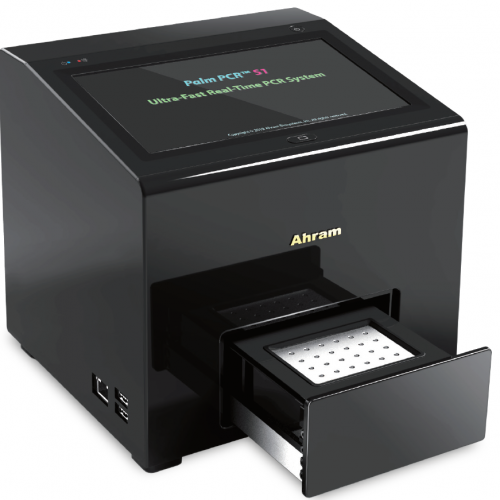
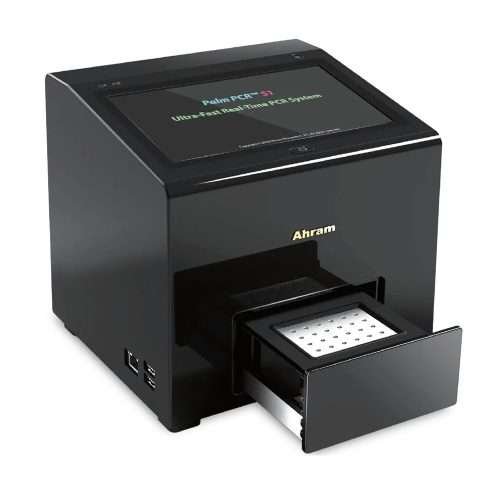
The Palm PCR S1 is an ultra-fast real time pcr instrument designed for laboratories looking for a compact, high-performance qpcr machine with rapid cycling, integrated software, and streamlined data analysis. This category features the Palm PCR S1 as a qpcr instrument suitable for gene expression workflows, pathogen detection studies, and applications that require accurate and efficient real time assays. Explore the product to purchase the system that fits your laboratory requirements.
A qpcr machine is an essential tool for laboratories performing real time pcr experiments, quantitative assays, gene expression studies, and pathogen detection workflows. These instruments support fluorescence-based detection in formats ranging from 96 well plates to compact block configurations that conserve space without compromising accuracy. Real time systems measure the fluorescence curve generated during each reaction cycle, producing data for quantitation and analysis. The qpcr machine available in this category is designed for laboratories that require high speed cycling, reliable performance, and easy-to-use software. Real time pcr depends on precise temperature control, stable excitation sources, and filters that capture fluorescence at the proper wavelengths, making instrument quality essential for reproducibility.
What a qPCR Machine Is
A qpcr machine is a real time pcr instrument designed to amplify and detect nucleic acids during each cycling step. Unlike thermal cyclers that perform endpoint reactions without monitoring fluorescence, a qpcr machine collects real time fluorescence data as the reaction progresses. Real time pcr uses dyes, probes, or multiplex chemistry formats that emit signals during amplification. The instrument includes a block for holding plates or tubes, a heating and cooling system for precise cycling, and optics for excitation and detection. A qpcr machine integrates these systems into a single platform which provides accurate measurement of each reaction curve.
Real Time PCR and Detection Principles
Real time pcr detection depends on optical components such as excitation lamps, filters, and sensors that record fluorescence changes throughout the reaction. The fluorescence curve provides quantitative information about targets and allows users to monitor amplification kinetics. Instruments with high sensitivity detect low target numbers, improving the capability of the system to support gene expression analysis and pathogen detection. Real time detection enables researchers to evaluate reaction performance without additional post-run assays. These systems reduce experiment time and simplify data interpretation.
Instrument Design and System Components
Each qpcr instrument incorporates a block designed to support 96 well plates, strip tubes, or caps, depending on the format. The Palm PCR S1 operates as a compact qpcr instrument with a small footprint and a reaction block optimized for rapid heating and cooling. Temperature accuracy and uniformity are important elements of real time pcr performance. Optical systems include filters for each wavelength, ensuring that multiplex reactions are measured reliably. The optics work with excitation sources such as a lamp or LED array, depending on model specifications. These instruments are designed as integrated systems that combine temperature control, optical measurement, and automation options.
Applications in Gene Expression and Pathogen Detection
Real time pcr is widely used for gene expression profiling, allowing researchers to compare expression levels across samples. The technique also supports pathogen detection workflows, which can be used in molecular research, environmental science, and laboratory studies. A qpcr machine provides the necessary detection speed and accuracy for these applications by recording fluorescence during each cycle. Real time pcr is a versatile method that supports a wide range of applications, including copy number assays, expression studies, and molecular characterization. The capability of the instrument ensures reliable performance even for low target concentrations.
Reaction Formats and Workflow Flexibility
Real time pcr instruments support 96 well formats for high-throughput assays, as well as smaller blocks for laboratories that emphasize efficiency over capacity. Reaction volumes, chemistry formats, and multiplex options vary depending on the system. Because the Palm PCR S1 uses a fast block design, it is suitable for applications with strict time requirements. Reaction parameters are entered into the software, which controls temperature cycles and real time detection. The system supports a wide range of fluorescence chemistries, and the filters ensure accurate detection across multiple channels. These formats provide laboratories with flexibility for different experiment types.
Data Analysis and Software Features
Real time pcr depends on data analysis software that interprets fluorescence readings. The Palm PCR S1 includes on board software that records reaction curves, supports data export, and provides tools for quantitation and analysis. Software plays an important role in the instrument workflow because it transforms fluorescence signals into interpretable information. Researchers can visualize amplification curves, assess reaction quality, and identify targets without external computer systems. Some laboratories require automation features to integrate real time pcr into larger systems; however, even without automation, on board analysis tools support independent data handling.
Performance, Speed, and Efficiency
Speed is an important consideration when selecting a qpcr instrument. The Palm PCR S1 uses a rapid heating and cooling system to reduce reaction duration while maintaining temperature accuracy. Performance characteristics are affected by block design, optical filters, excitation sources, and software processing speed. Thermal cyclers used for endpoint pcr do not provide real time fluorescence readouts; this difference highlights why a qpcr machine is chosen when quantitation and real time detection are required. The instrument maintains consistent reaction conditions across all wells, supporting reproducibility and high accuracy.
Instrument Size and Format Considerations
Laboratories look for instruments which combine performance with practical size limitations. The dimensions of a qpcr machine affect how easily it fits into existing laboratory layouts. A qpcr instrument is available in different formats, including compact systems like the Palm PCR S1 and larger models such as the applied biosystems series. Size influences the block capacity, with 96 well designs being the most common. Selecting a system depends on throughput demands, experiment frequency, and workflow structure. Laboratories looking for a compact system choose devices which minimize space while maintaining optimal performance.
Validation and Experiment Requirements
Real time pcr experiments require validation steps that confirm temperature uniformity, optical accuracy, and proper detection across all wells. The Palm PCR S1 provides consistent cycling, ensuring that reaction parameters remain stable. They can be used in a variety of molecular applications where uniform detection and reproducible gene expression results are important. Validation processes evaluate curve behavior, reaction consistency, and fluorescence response. This allows researchers to rely on the instrument for assays which demand precision.
Understanding Instrument Differences
There are differences between qpcr systems such as optical design, reaction block format, number of filters, lamp type, and software capabilities. These differences influence sensitivity, multiplex capability, and overall performance. Some systems include automation or additional data analysis tools, while others focus on speed and portability. Researchers compare instruments by evaluating temperature accuracy, optical performance, and reaction throughput. When looking for a qpcr machine suited to your workflow, consider reaction formats, available filters, and software flexibility before making a decision.
How to Select a qPCR Machine
Selecting a qpcr instrument depends on throughput needs, size requirements, real time pcr chemistry preferences, and applications such as pathogen detection or gene expression. Laboratories looking for a compact instrument evaluate systems with on board data analysis, high speed cycling, and reliable detection. The Palm PCR S1 combines rapid performance with a small footprint, making it suitable for laboratories that need efficiency without excess capacity. If you are looking for a qpcr machine that aligns with your workflow, you can review product details or contact our team to request additional information. When ready, you can add the system to purchase directly from the product page.
FAQ
What machine is used for qPCR?
A qpcr machine, also called a real time pcr instrument, is used for amplification and fluorescence detection during each reaction cycle.
What is the difference between PCR machine and qPCR machine?
A thermal cycler performs endpoint amplification without real time detection, while a qpcr machine measures fluorescence during each cycle to provide quantitative data.
How much does a PCR test machine cost?
Prices vary depending on instrument size, capability, block format, and included software features. Costs differ across product series and performance levels.
What does qPCR stand for?
qPCR stands for quantitative polymerase chain reaction, a method that measures fluorescence during real time pcr to quantify nucleic acids.