

Showing the single result
-
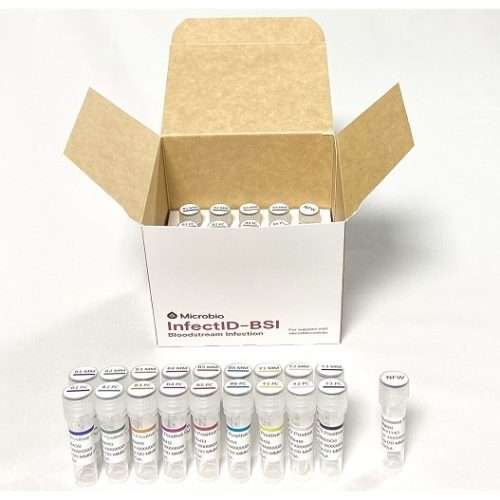 Sepsis Detection Kits
Sepsis qPCR Kit – InfectID™-BSI
Sepsis diagnosis is a complex process involving the identification of infection, assessment of clinical criteria, and evaluation of organ dysfunction caused by a dysregulated host response to infection. According to the third international consensus definitions (Sepsis-3), sepsis is a life-threatening condition defined as organ dysfunction caused by an abnormal response to infection, with septic shock representing a more severe stage involving cardiovascular dysfunction.
In laboratory settings, the focus is not on the management of sepsis, but on supporting research and diagnostic frameworks through pathogen detection, molecular analysis, and sample-based investigation. At You Do Bio, we provide specialized tools such as the INFECTID-BSI qPCR kit, designed to support molecular workflows used to identify pathogens associated with sepsis and septic shock in controlled environments.
Sepsis is a syndrome that arises when the host response to infection becomes dysregulated, leading to systemic inflammation and potentially threatening organ dysfunction. Sepsis can lead to complications affecting multiple systems, including cardiovascular dysfunction, renal impairment, and cellular damage.
Sepsis and septic shock represent a continuum of disease severity. While septic shock involves more pronounced circulatory abnormalities, both conditions are associated with increased risk of long term mortality and require rapid identification of underlying infection mechanisms.
Although symptoms include fever, shortness of breath, altered blood pressure, and other systemic indicators, these clinical features are evaluated by clinicians. In laboratory contexts, sepsis is studied through microbial detection, molecular signals, and analytical workflows rather than direct patient assessment.
Sepsis diagnosis cannot rely on a single test. Instead, it involves the integration of multiple data sources, including clinical observations, blood tests, and microbiological findings.
To diagnose sepsis, clinicians evaluate:
Laboratories contribute to this process by identifying pathogens through blood cultures, molecular detection methods, and other analytical tools.
Blood cultures remain one of the most common tools used to identify pathogens in patients with sepsis. These methods allow microorganisms to grow under controlled conditions, enabling further analysis such as antimicrobial susceptibility testing.
However, blood cultures may take time to produce results and can be affected by low microbial load or prior antibiotic exposure. Despite these limitations, they remain essential for confirming a bacterial infection and supporting clinical decision-making.
In research and laboratory workflows, blood cultures are often used alongside molecular methods to provide a more complete picture of infection dynamics.
Molecular detection technologies, particularly qPCR, play an increasingly important role in sepsis diagnosis research.
qPCR assays are designed to identify microbial DNA directly from samples, enabling faster detection compared to culture-based approaches. These methods can be used to identify a wide range of pathogens associated with sepsis and septic shock, including bacteria and other microorganisms.
While qPCR is a powerful tool, it has important limitations:
Because of these factors, molecular detection is typically used alongside blood cultures and other laboratory methods.
Identifying pathogens in sepsis can be difficult due to several factors:
These challenges increase the risk of incomplete detection and highlight the importance of combining multiple diagnostic approaches.
In laboratory research, sepsis is studied as a biological and molecular phenomenon involving host response to infection, inflammatory pathways, and microbial dynamics.
Sepsis can lead to systemic inflammatory response syndrome (SIRS), cell death, and tissue-level changes. These processes are analyzed using molecular assays, genomic tools, and biomarker profiling.
While severe sepsis or septic terminology appears in scientific literature, current frameworks focus on sepsis and septic shock as defined by Sepsis-3.
The You Do Bio Sepsis qPCR Kit (INFECTID-BSI) is designed to support laboratory workflows focused on pathogen identification.
This kit provides:
The kit is intended for use in research applications, including studies of sepsis and septic shock, host-pathogen interactions, and molecular analysis of infection.
qPCR-based detection systems can be integrated into broader research workflows, including:
These workflows help researchers better understand the mechanisms of sepsis and improve detection strategies in laboratory environments.
Because sepsis is associated with complex interactions between pathogens and host response, rapid identification of microbial DNA is essential in research settings.
Molecular tools allow laboratories to:
These capabilities help advance understanding of sepsis and contribute to improved research methodologies.
Sepsis is diagnosed by clinicians using a combination of clinical evaluation, blood tests, and microbiological evidence. Laboratories support this process through pathogen detection but do not diagnose independently.
No single test can diagnose sepsis. Blood cultures, molecular assays, and biomarker analysis all contribute to the overall assessment.
qPCR is used to detect microbial DNA and identify pathogens rapidly, supporting laboratory workflows and research applications.
Molecular tests complement but do not replace blood cultures, as cultures are required to confirm viability and perform susceptibility testing.
Showing the single result
Contact Pete at YouDoBio.